
From a Showcase Feed to Dynamic Content: How Can a Hotel Engage Its Community?
Social Media Content for Hotels: How to Engage Your Community?

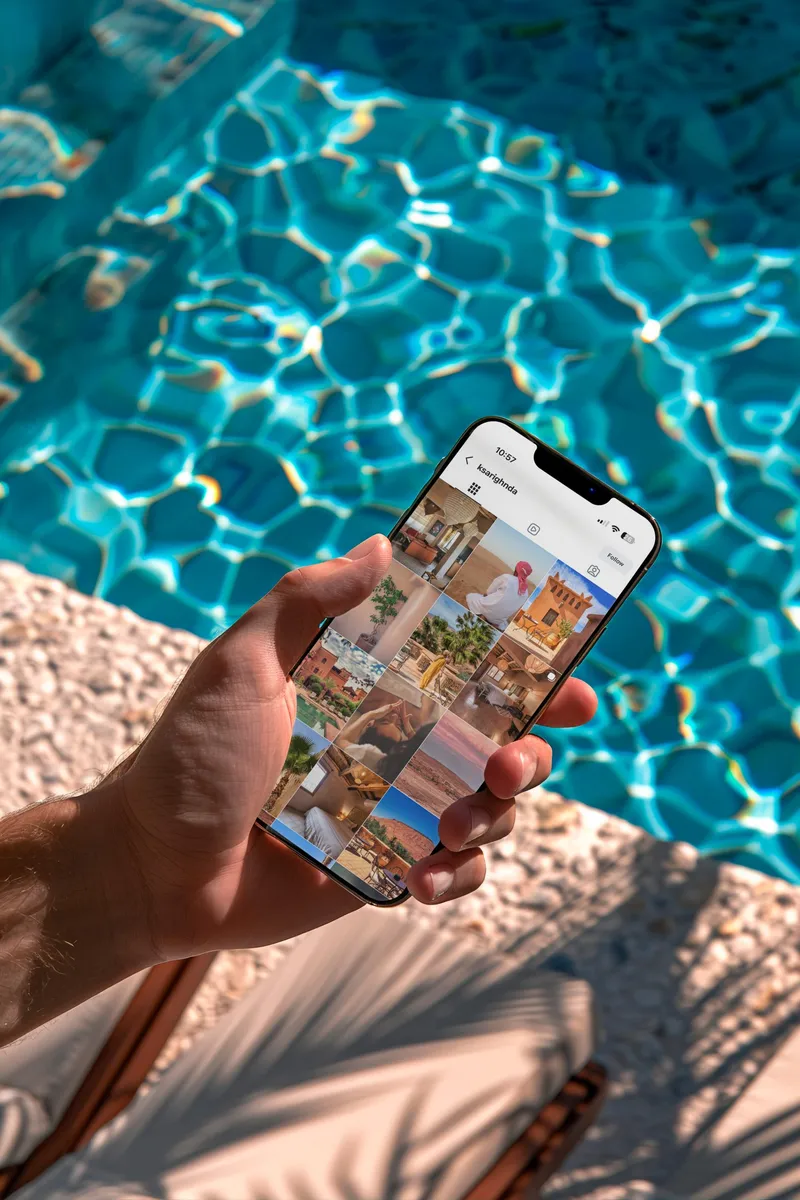
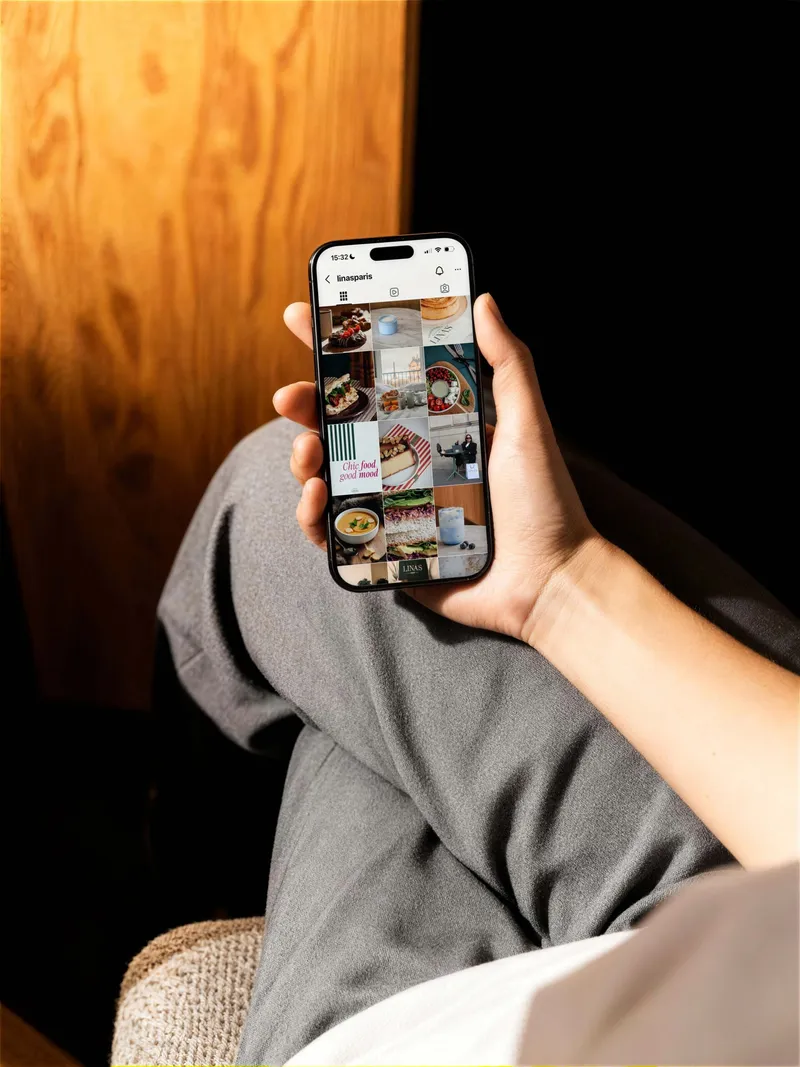

A beautiful photo of a guest room is no longer enough to build a relationship with followers. Today, a hotel’s social media content must go beyond simply showcasing its facilities to tell a story, spark reactions, and encourage interaction. Behind-the-scenes glimpses, team profiles, immersive videos, guest testimonials… Every post becomes an opportunity to bring the brand to life beyond the guest’s stay. But you still need to know what to post, how often, and with what goal in mind. As a specialist in hospitality and premium lifestyle brands, Eliophot supports establishments in their content strategy and hotel community managementto develop a consistent, authentic, and engaging social media presence.
Why isn’t a beautiful feed enough anymore to engage a hotel’s community?
For a long time, hotels’ Instagram communication relied mainly on a series of carefully curated photos: elegant rooms, pools, breakfasts, panoramic views… These visuals remain essential for showcasing the property and reinforcing its positioning. But on their own, they do not constitute a true social media strategy for a hotel.
A cohesive feed creates a first impression. Lively content, on the other hand, gives people a reason to follow the brand, come back to check its posts, and start a conversation.
The challenge, therefore, is no longer just to show what the hotel looks like, but to convey what makes it unique. What’s the atmosphere like at breakfast? Who creates the bar’s cocktails? What tips does the team share for exploring the surrounding area?
These topics add a human touch to the brand’s communication and allow followers to imagine themselves experiencing what the hotel has to offer.
The goal is also to go beyond the pursuit of immediate visibility. An engaged community can help maintain the hotel’s reputation, build trust among future travelers, and keep the connection with past guests.
The real challenge of hotel community management, then, is to transform an account that people simply follow into a brand with which they engage.
What kind of content should you post to keep your hotel’s social media accounts active?
To build a loyal community, it’s best to develop a hotel editorial strategy centered on several complementary themes rather than posting a large number of inconsistent updates. These pillars allow you to vary your messaging while maintaining the hotel’s identity.
Focus on the guest experience rather than just showcasing the facilities
A photo of a guest room provides information about its layout. A video showing what it’s like to wake up in that room—the morning light and breakfast served on the terrace—tells a whole different story.
That’s the whole point of storytelling for social media: placing the experience at the center of the content so viewers can imagine themselves there.
For a hotel with a spa, this might involve describing the different stages of a wellness retreat. For an urban hotel, it could mean showcasing an ideal day that includes exploring the neighborhood, having lunch at a restaurant, and returning to a comfortable room.
This approach also applies to premium lifestyle brands. Rather than simply showcasing a product or a space, the content reveals the ways it’s used, the sensations it evokes, and the world associated with it.
The key is to tell a story that accurately reflects what the brand actually offers.
Highlighting the staff, behind-the-scenes glimpses, and the destination
Employees are an essential part of a hotel’s identity. Yet their expertise is often overlooked in publications.
A profile of the chef, preparing a room, selecting local products, tending the garden, or creating a signature cocktail: these moments offer numerous opportunities for authentic content.
They allow you to showcase the work that goes into the guest experience without necessarily resorting to complex productions.
The destination is another valuable editorial pillar. A hotel can share recommendations from its concierge, feature a local artisan, or suggest ideas for walks.
These posts provide added value to subscribers, even when they aren’t planning to stay at the hotel right away.
They also help anchor the brand in its local community and extend its brand experience beyond its own premises.
Highlighting Customer Content and Testimonials
Travelers themselves can become contributors to the hotel’s communications.
A hotel’s UGC—short for User-Generated Content—refers to photos, videos, or reviews created by its guests.
A photo taken from a terrace, a video of a stay, or a review can enrich the editorial content by offering a perspective different from that of the brand.
This content is particularly valuable when it reflects a genuine experience, free from staged advertising.
However, using this content requires obtaining the necessary permissions before reposting, especially when people are identifiable.
The hotel can also encourage guests to share their memories by suggesting, for example, that they tag the hotel’s account in their posts.
The goal is not to turn every traveler into an ambassador, but to naturally highlight the experiences that guests choose to share.
Reels, Carousels, and Stories: Which Format Should You Choose to Engage Your Audience?
Relevant content can lose its appeal when presented in the wrong format. To optimize a hotel’s social media content, each post must therefore serve a specific purpose.
On Instagram, three formats in particular allow you to diversify your content.
-
Reels to showcase and evoke emotion: these short videos are ideal for immersive tours, behind-the-scenes glimpses, and clips that bring the hotel experience to life. Preparing breakfast, checking into the hotel, or exploring the spa can thus become compelling visual stories.
-
Carousels to inform and inspire: they allow you to explore a topic through multiple images. A hotel can showcase five experiences to enjoy around its property, detail its different room categories, or suggest a discovery itinerary.
-
Stories to foster a sense of connection: More spontaneous, they capture the day-to-day life of the hotel. Polls, questions, news, and moments shared with the team open the door to conversation.
The choice also depends on the audience and the message. A property looking to highlight its event planning expertise to a business clientele might, for example, tailor certain content for LinkedIn.
An effective strategy does not involve systematically replicating the same posts across all platforms.
It relies on a selection of complementary formats, tailored to audience preferences and communication objectives.
The right format isn’t necessarily the trendiest one, but the one that best serves the message and the story you want to tell.
How can you turn your followers into a truly active community?
Creating engaging content is the first step. But a hotel’s Instagram engagement also depends on its ability to foster interaction with its community.
This is where community management comes into play: it’s not just about scheduling posts, but also about listening, responding, and nurturing relationships with your audience.
One effective practice is to include calls to action in your content when they’re genuinely relevant. For example, a hotel located near several natural attractions could ask its followers which excursion they’d like to experience during their next stay.
Stories also provide an opportunity to ask about preferences, answer frequently asked questions, or gather suggestions.
However, interaction doesn’t stop with the post itself. Responding to comments, handling private messages, and thanking guests who share their experiences are all integral parts of community management.
This approach must remain consistent with the establishment’s positioning. A luxury hotel might prioritize an elegant and personalized tone, while a lifestyle hotel might adopt a more spontaneous one.
Community loyalty is built on this continuity in relationships.
It allows you to maintain contact with travelers after they’ve checked out, while fostering a sense of familiarity among those considering their first stay.
An active community is therefore not measured solely by the number of comments; it is also built on the quality of interactions and the relevance of the responses provided.
How can you create an editorial calendar that fits your hotel’s schedule?
Between check-ins, check-outs, managing staff, and unexpected operational issues, hoteliers rarely have time to come up with content at the last minute.
A hotel’s editorial calendar allows you to plan content creation in advance, organize themes, and maintain consistent communication—even during peak periods.
The process begins by identifying the property’s key highlights: seasonal trends, events, new offerings, destination news, or experiences worth highlighting.
These elements are then matched with the most relevant editorial pillars and formats.
For example, a week’s worth of posts might include:
-
Monday: a carousel showcasing experiences to discover near the hotel.
-
Wednesday: a Reel dedicated to preparing a signature dish.
-
Friday: Stories offering a behind-the-scenes look at how guests are welcomed.
This schedule is merely an example and not a mandatory frequency. The posting schedule should be determined based on available resources, objectives, and audience feedback.
Planning also benefits from incorporating photo and video production sessions. Grouping multiple shoots together allows you to build a library of content that can be used over different periods.
Finally, an effective schedule allows for some flexibility. Local news, a team initiative, or a spontaneous moment can enrich the initial programming.
The goal is to balance foresight with authenticity, without turning communication into a series of automated posts.
What KPIs should you track to measure your community’s engagement?
To evaluate the effectiveness of its strategy, a hotel must look beyond the number of followers or “Likes.”
While these metrics provide some insight, they aren’t enough to understand the true value of interactions.
Tracking hotel community management KPIs—or key performance indicators—helps identify the content that interests the audience and adjust your strategies accordingly.
Several metrics deserve special attention:
-
Reach: the number of unique accounts that have seen a piece of content, which is useful for assessing its distribution.
-
Engagement rate: the ratio of selected interactions to a defined metric, such as reach. It facilitates comparisons between posts, provided the same calculation method is used.
-
Shares and saves: valuable indicators for identifying posts that users want to share or revisit.
-
Replies and private messages: interactions that can reveal specific questions, expectations, or interest in the institution.
-
Clicks to the website: an indicator that shows whether certain content encourages users to explore further.
To take this a step further, using tracked links with UTM parameters allows you to identify visits originating from specific campaigns or posts within a web analytics tool.
However, it’s important to distinguish between a click, an intent to book, and an actual booking.
Above all, the analysis should lead to concrete decisions: which topics to explore further, which formats to prioritize, which questions to address, and which content to revise?
The goal is not to produce impressive numbers, but to understand what the community truly expects from the brand.
Why entrust your community management to an agency that specializes in the hospitality industry?
Managing a hotel’s social media requires much more than just photography skills or a good understanding of Instagram.
You need to define a strategy, understand customer expectations, produce content, organize its distribution, foster engagement, and analyze performance.
All while maintaining a consistent brand identity.
Working with an agency that specializes in hotel community management helps structure these various aspects and integrate them into a comprehensive approach.
Knowledge of the hospitality sector is a particular asset here. Content must take into account seasonality, operational constraints, the diversity of the clientele, and the positioning of each property.
The communication strategy for an urban boutique hotel does not necessarily follow the same guidelines as that of a family resort or a luxury hotel.
Support can include defining the editorial direction, producing content, managing interactions, organizing the content calendar, and tracking results.
It also requires regular collaboration with the property’s teams, who remain the primary sources of information about the actual experiences offered.
This combination of on-the-ground knowledge and social media expertise helps build a more cohesive online presence.
The agency’s role is therefore not simply to post on behalf of the hotel, but to provide direction for its communications and to adapt its strategy in line with defined objectives.
Why choose Eliophot for community management?
Specializing in hospitality and premium and luxury lifestyle brands, Eliophot combines editorial expertise, creativity, and an understanding of the unique communication challenges faced by each establishment.
Our approach to community management goes beyond simply posting to an Instagram account. We analyze your brand’s voice, identity, and your audiences’ expectations to create meaningful content.
From social media strategy to photo and video production, community engagement, and performance analysis, we build a digital presence that aligns with your brand positioning.
Our goal: to turn your social media into a true space for expression, dialogue, and building loyalty—all in support of your brand image and objectives.
What if your social media became much more than just a showcase?
Let’s discuss your business, your ambitions, and opportunities to grow your community.
Schedule a meeting with the Eliophot teams to bring to life a content strategy that reflects who you are.
Eliophot,
your 360° agency