
Visual Identity: How Can You Make a Brand Instantly Recognizable?
Brand Visual Identity: How to Stand Out
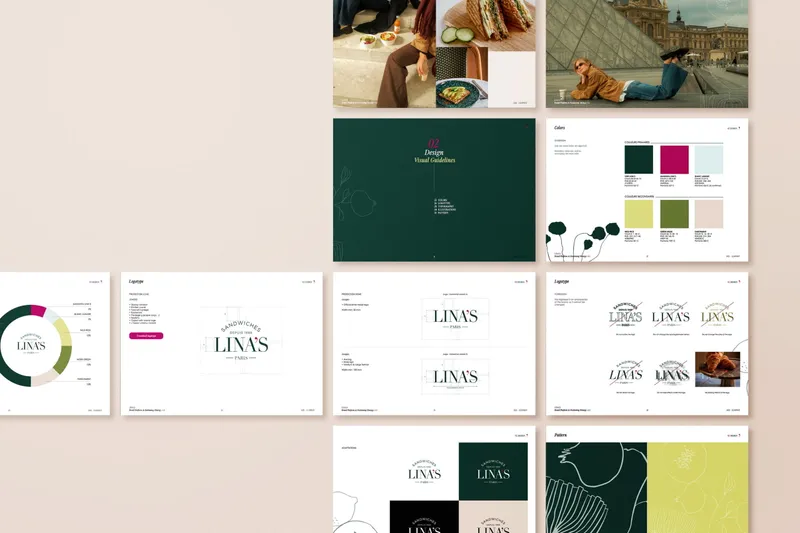
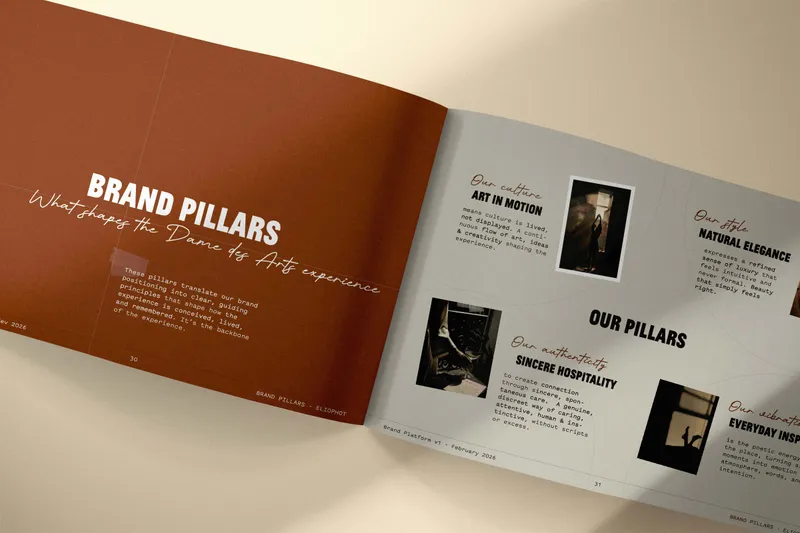
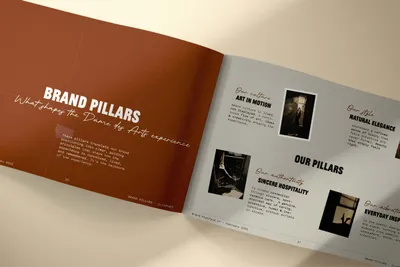

A brand’s visual identity brings together the elements that make it recognizable: logo, colors, typefaces, images, and layouts. For a hotel—just as for a lifestyle brand—the challenge lies in expressing a personality that the public can recognize through repeated encounters. But first, you need to know what story these elements should tell. Based on a clear brand platform, the graphic design takes a specific direction. How can you spot an image that has become generic, choose the right visual cues, and bring them to life across your platforms? Here are the questions to ask before evolving your brand identity.
What is a truly distinctive brand visual identity?
A distinctive identity makes it possible to attribute a communication to the right brand. It combines recognizable graphic elements with consistent application. Brand identity, in a broader sense, also includes positioning, values, and personality. The visual identity is its graphic expression; the style guide specifies the rules for its use.
Logo, colors, typefaces, and graphic elements
The logo identifies the brand. Alongside it, the color palette, typefaces, patterns, and layouts form a common visual language. Your brand’s visual identity must organize how these elements relate to one another: which color dominates, how headings are presented, and what role images play.
Photography also requires precise direction. Framing, lighting, human presence, and image processing all contribute to the visual universe. When preparing a hotel feature, ask yourself, in particular, which gestures, spaces, and details truly embody your hospitality. For a lifestyle brand, ask the same question of the products, materials, and uses depicted.
Consistency, Repetition, and Memorability
Visual recognition is built through the recurrence of visual cues. A consistent approach to composing images or using a color can accompany multiple messages without replicating the exact same design.
So distinguish between consistent elements and variables: typefaces can remain the same while photographs change with the seasons. This continuity supports brand recall. However, it must resonate with the public: an identity that’s familiar to your teams isn’t necessarily familiar to your future customers.
How do you identify a brand identity that has become generic?
To evaluate your brand’s visual identity, start by gathering your current materials: website pages, social media posts, brochures, menus, signage, and packaging. Review them together before considering a redesign.
Here are four helpful questions:
-
Distinctiveness: What elements help identify your brand beyond its name?
-
Uniqueness: Which design choices express your brand’s personality rather than just creating a pleasant vibe?
-
Consistency: Do your materials look like they belong to the same company?
-
Usability: Do your teams have the necessary files and guidelines to create materials?
Temporarily hiding the logo can help you examine other distinctive features. This initial internal exercise is meant to generate hypotheses; it does not replace a customer survey.
A brand’s visual identity can remain relevant even when it’s poorly implemented. Before changing the logo, check whether any inconsistencies stem from outdated templates, missing files, or ambiguous guidelines. The assessment should lead to a clear decision: better implementation of the existing design, adjustment of certain components, or a more thorough overhaul of the brand’s visual identity.
How does the brand platform guide visual decisions?
The brand platform provides the creative team with decision-making criteria: target audiences, positioning, brand promise, and brand personality. When building a brand’s visual identity, it allows for a discussion of a proposal’s relevance beyond individual preferences.
Translating a positioning into graphic decisions
Before choosing a direction, ask what it conveys and which aspects of your business it draws upon. An intention such as “being more premium” deserves further clarification: do you want to highlight expertise, an intimate experience, or a contemporary approach?
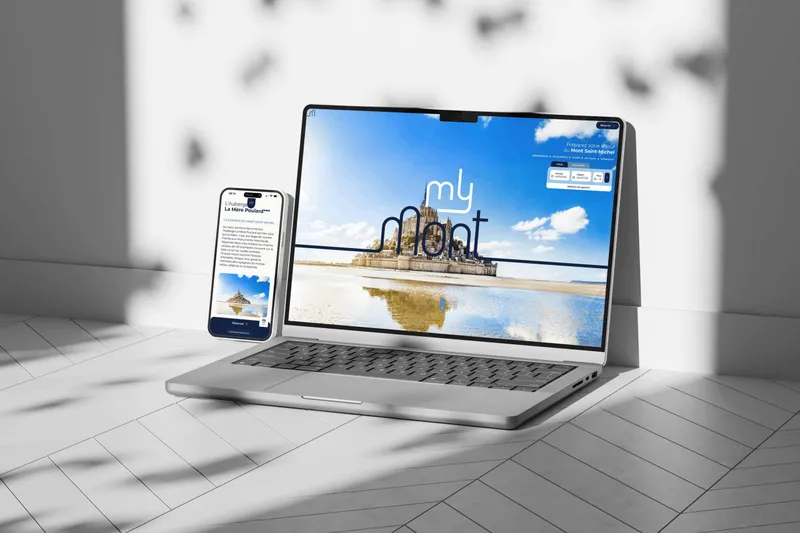
The My Mont project, featured in our portfolio, illustrates this translation. The logo incorporates the silhouette of Mont-Saint-Michel. The curves in the web design evoke the tides, while the color palette combines navy blues and sandy tones. These choices connect the design to a specific region.
For your project, insist on this alignment between intention and execution. Your brand’s visual identity should be explainable in simple terms.
Evolving Your Image Without Losing Your Identity
A graphic refresh adjusts the visual expression. Rebranding can prompt a broader reflection on positioning and how the brand presents itself. The scope must be defined before the design process begins.
If your offering is evolving, identify which elements to keep, transform, or discard. Base these choices on the audit and available customer feedback. Rethinking your brand’s visual identity doesn’t necessarily mean starting from scratch: begin by determining what still works and what no longer aligns with your project.
What principles ensure brand recognition across all media?
A brand’s visual identity must remain recognizable in different contexts. To evaluate a creative direction, examine its real-world applications: a polished presentation isn’t enough to verify how it functions in everyday use.
Distinctiveness and Simplicity: Choosing Effective Symbols
Distinctiveness refers to the ability of your symbols to set you apart. Simplicity concerns how easily they are read and used. Both must be developed together: streamlining a brand’s visual universe should not lead to removing what gives it its character.
Evaluate each proposal with concrete questions: Is the symbol still legible when scaled down? Do headings stand out from the body text? Does a pattern enhance the composition or distract from the information?
For your brand’s visual identity, choose elements with a clear purpose. Avoid piling on effects just to create a sense of novelty.
Adaptability: From Mobile Sites to Physical Media
Test the designs in their intended formats. For a hotel, this might include a booking screen, a room key card, and a directional sign. For a lifestyle brand, a product sheet, a label, and packaging are other scenarios to consider.
Check text readability, contrast, photo cropping, and logo versions on light or dark backgrounds. Also plan for print proofs when the choice of paper or finish is important to the project.
The brand’s visual identity should guide these adaptations without requiring an identical layout everywhere.
How does an agency develop a sustainable visual system?
Part of an agency’s job is to ensure that creative work is practical and usable. At Eliophot, our support for brand guidelines includes a visual audit and discussions with teams about how they use the brand assets. This on-the-ground understanding informs the definition of the rules.
Developing a Brand Guidelines Manual and Practical Tools
To provide a clear framework for your project, specify the expected deliverables. The brand guidelines should, in particular, explain how to use the logo, colors, typefaces, and images. Ask for examples that meet your needs, as well as guidance on common mistakes to avoid.
Supplement this document with the tools agreed upon with the agency:
-
logo variations and files adapted to their intended uses;
-
color references for screen and print;
-
templates for documents or publications;
-
guidelines for selecting and editing photographs.
Also specify the terms of use for fonts and images. A brand’s visual identity must be able to be communicated to a new employee or vendor without relying on scattered verbal explanations.
Organize a rollout that aligns with your business
Make an inventory of the materials to be updated, then assign a person in charge, a budget, and a deadline to each one. For a hotel in operation, factor production constraints, printed inventory, and team availability into the schedule.
Prioritize updates based on the visibility of the materials and their role in the customer journey. Also define a transition period to manage the coexistence of old and new versions.
Finally, centralize the approved files and archive the replaced documents. To keep your brand’s visual identity alive, designate someone capable of answering questions about its application and approving any adaptations.
How can you tell if your brand is becoming more recognizable?
To evaluate a brand’s visual identity, distinguish between recognition, aesthetic appeal, and business results. A design can be appealing without being correctly attributed; an increase in bookings alone does not prove the effectiveness of the design.
You can conduct an attribution test with members of your target audience. Present several designs without their names and ask which brand they correspond to. Compare the responses of customers already familiar with your brand with those of prospects.
To track changes over time, maintain comparable conditions: types of media, questions, and respondent profiles. Note correct attributions and instances of confusion. These results must be interpreted in light of the sample’s size and composition.
Internally, also track recurring application errors and difficulties encountered with the templates. When it comes to your brand’s visual identity, graphic consistency is reflected both in published designs and in the teams’ ability to use the tools. These observations provide concrete insights for adjusting your visual branding.
Why choose Eliophot for your visual identity?
Eliophot supports hotels and lifestyle brands with branding strategy, visual identity, website design, and content creation. To help your brand evolve, the agency combines strategic positioning with graphic design.
Its approach to graphic guidelines takes into account your teams’ workflows, your budget, and your timeline. The goal: to build a framework that aligns with your business and can be applied across your media.
Are you considering a rebrand or a new graphic design project? Share your business proposal, your current materials, and the changes you’d like to see to define the scope of our support.
With Eliophot, give your brand’s visual identity a direction grounded in your positioning and designed for practical applications.
Schedule a meeting with the Eliophot team to discuss your brand project.
Eliophot,
your 360° agency