
Rebranding: How Can You Reposition Your Brand Without Losing Its Identity?
Brand Rebranding: Preserving a Brand’s Identity
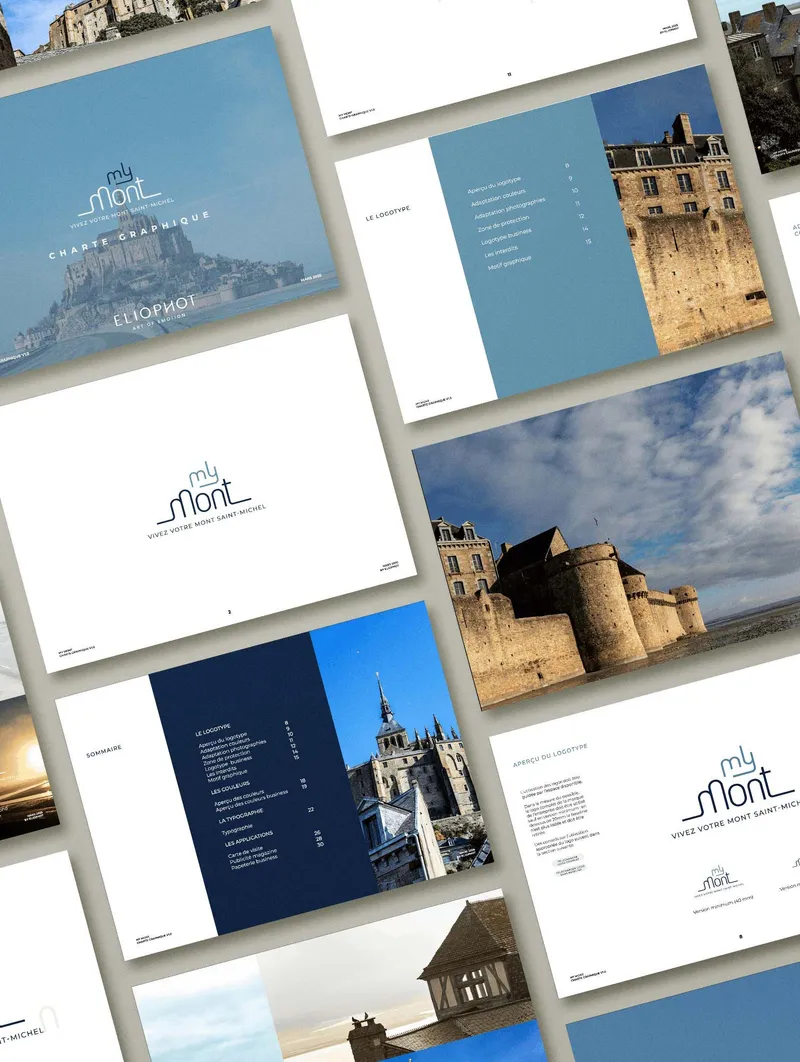

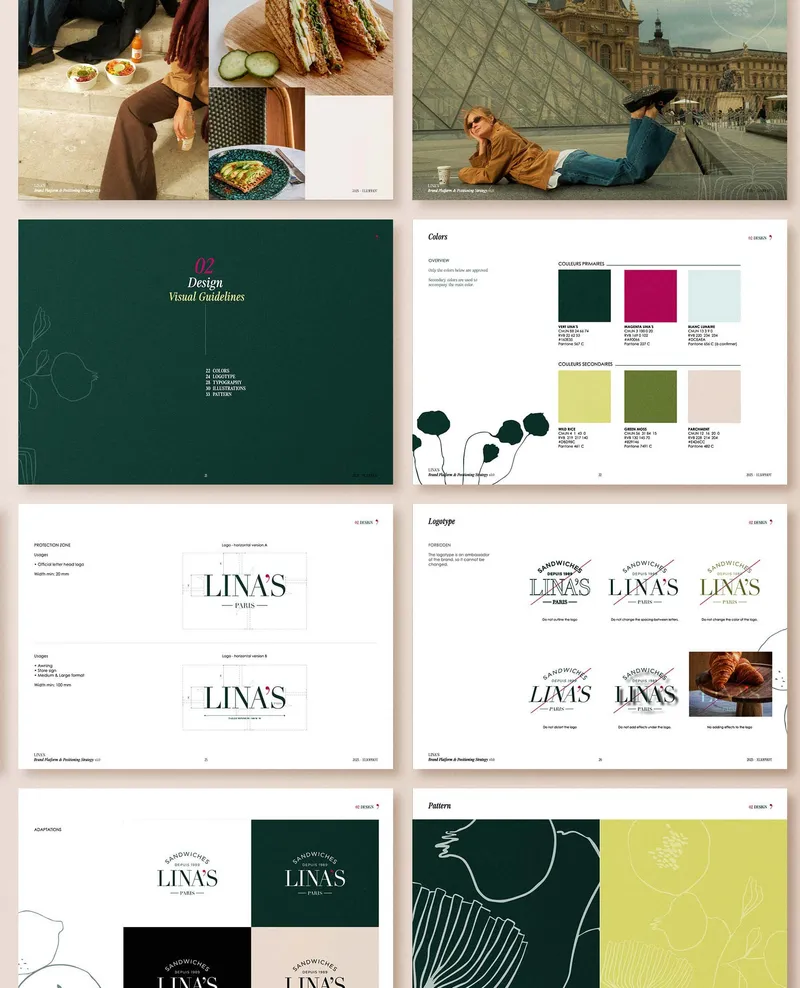

Your hotel is evolving. Should its image evolve as well? A brand rebranding involves updating all or part of a brand’s identity to better express what it stands for. For a hotelier, the challenge is to make the brand’s vision clear while preserving the elements that matter most to guests. Before choosing a new logo, you must therefore clarify what is changing and what should remain the same. Working with a brand strategy agency can help structure this process. Here’s how to approach your repositioning, from the initial analysis to post-launch follow-up.
What is brand rebranding?
Brand rebranding can involve the name, visual identity, messaging, or the way offerings are presented. Its scope depends on the problem to be solved: clarifying a brand promise, reflecting a move upmarket, or supporting a new organizational structure.
To frame your project, consider three levels:
-
Brand repositioning defines the position you want to occupy in the minds of your audiences and the reasons for choosing you.
-
An identity redesign revamps the brand’s visual expression: logo, colors, typefaces, photography, and brand language.
-
Rollout applies the selected choices to marketing materials and customer interactions.
A brand rebranding does not necessarily require a name change. A targeted evolution may be appropriate when the brand’s foundations remain relevant. Conversely, a broader transformation warrants consideration if the company’s offerings and business strategy have changed significantly. The assessment must determine the scope of the project before any creative work begins.
When is rebranding necessary?
A brand rebranding is worth considering when your brand identity no longer accurately conveys what your business is all about. Look for observable signs: discrepancies in customer feedback, offerings that are misunderstood, or marketing materials that have become inconsistent.
When the perceived image no longer reflects your establishment
Compare what you want to convey with what your guests actually understand. Do your photos show the current rooms? Do the descriptions explain the guest experience? Does your marketing message align with the services available on-site?
To objectively assess brand perception, compare guest reviews, questions asked at the front desk, and feedback collected from customers. Look for specific discrepancies, beyond just a general impression of an outdated image.
The Hôtel de la Mer offers a well-documented example : major renovations and a new decor were accompanied by a rebranding, including a new logo and a new website. The transformation of the property provided a concrete context for evolving its presentation.
When the offering, target audiences, or organization evolve
The launch of a new business, changes in your primary customer base, or the merger of several establishments are all situations worth examining. The question is simple: does your brand still clearly convey what you offer and who you’re targeting?
When multiple businesses coexist, refine your brand architecture. It organizes the relationships between the hotel, its restaurant, its spa, or a collection of properties. Determine which entities communicate independently and which ones should highlight their affiliation.
Brand rebranding must address this need for clarity. Before embarking on it, also check whether the problem lies more with the offerings, the quality of service, or the booking process. These issues require specific actions of their own.
What should be retained from the existing identity?
Preserving your identity means identifying what is valuable to customers and to the project. A brand rebranding effort begins by distinguishing between the elements to retain, those to evolve, and those to discard.
Identify the elements your customers value
Examine the name, visual elements, the venue’s history, and the way guests are welcomed. For each element, ask three questions: Is it recognizable? Is it appreciated? Is it consistent with the experience you want to create?
Base this analysis on concrete evidence: feedback gathered, archives, materials used, and observed practices. Avoid attributing a level of attachment to customers that you haven’t verified.
Next, compile a well-reasoned list of elements to preserve. An architectural detail, a color, or a greeting formula may be considered in this context. None should be retained automatically; its place in the future identity must be justified.
Choosing Between Targeted Evolution and More Profound Transformation
The appropriate scope of change depends on the assessment. If the name is recognizable and remains consistent with your project, start by examining other levers: messaging, product hierarchy, visual style, or graphic guidelines.
A more profound brand rebranding requires clarifying what each change brings. Changing a well-known symbol warrants an explicit justification that is understandable to both teams and customers.
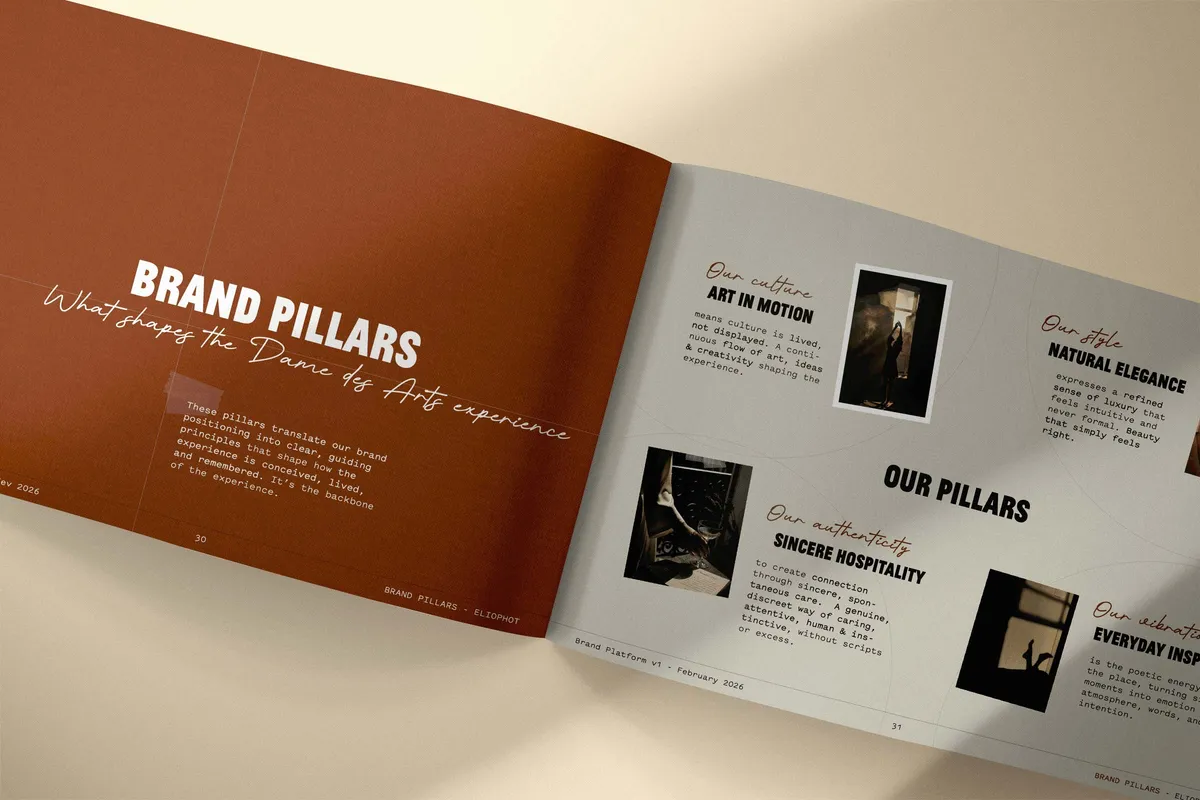
For Dame des Arts, the project we published focused in particular on clarifying an already established identity. The work included the brand platform, the brand voice, and the organization of existing graphic elements. This case illustrates a structuring effort, without the need to present the institution as an entirely new brand.
What are the steps involved in a brand repositioning?
To manage your brand repositioning, organize the work around a series of decisions. Each step must produce a clear, validated deliverable before moving on to the next one.
Audit the brand and define the problem to be solved
Gather all current materials: website, brochures, booking messages, social media, signage, and sales materials. Supplement this inventory with discussions with management and teams who interact with customers.
Next, examine audience expectations and how your establishment presents itself in the market. Your audit should identify inconsistencies, documented strengths, and unresolved issues.
Conclude with a brand rebranding brief: the identified issue, target audiences, objectives, elements to preserve, and the scope of changes. Designate the individuals responsible for approvals. This document will serve as a reference when deciding between multiple creative proposals.
Formalize the positioning in a brand platform
The brand platform brings together the foundations that will guide your communication: vision, mission, values, promise, and positioning. It should clearly answer one question: Why choose your establishment for this stay?
Link each commitment to available evidence: if you want to highlight personalized service, identify the practices that make it tangible. If these practices have yet to be established, include them in the operational plan before presenting them as a given.
Your rebranding strategy will then have a framework for decision-making. Any message or graphic design proposal must be evaluated based on this framework, not solely on individual preferences.
Translate the strategy into a visual and editorial identity
Apply the positioning to the necessary elements: logo, color palette, typography, iconography, and tone of voice. Also specify the preferred words, phrases to avoid, and how to present the various offerings.
Test the proposals on actual media. A room information page, a pre-stay email, and welcome signage will allow you to assess their readability in various contexts.
Document the guidelines in a brand guide with examples of how to apply them. This ensures the rebranding can be effectively implemented on a daily basis. Provide a version accessible to teams and service providers, complete with labeled files and a designated contact person for implementation questions.
How can you roll out your new brand identity without confusing your customers?
Launching a brand rebranding initiative requires a shared timeline. Identify the visible changes, the people responsible for them, and their dependencies to ensure a smooth transition.
Prepare your teams and explain the change
Before the public announcement, explain to your teams the reasons behind the change, the decisions made, and their practical implications. Prepare a brief explanation that they can adapt when speaking with customers.
Distinguish between what is changing and what remains the same, while staying factual. Notify customers who have already made reservations when the change affects key details relevant to their stay: the displayed name, access to the property, or documents they’ve received.
Also prepare answers to anticipated questions: How will they recognize the property? Where can they find their reservation? Who should they contact? To support the brand rebranding, the launch message should explain what this change means for the customer.
Coordinate materials and maintain digital continuity
Create a rollout schedule: medium, expected change, person in charge, cost, and update date. Include less visible elements, such as electronic signatures, reservation confirmations, gift certificates, and documents sent to partners.
The budget must cover the planning, design, and production of materials. Build the timeline based on your operational constraints, production lead times, and team availability. A brand rebranding cannot be properly costed without this scope.
If URLs change, set up mappings to the new pages and relevant permanent redirects. Update internal links and the sitemap, then monitor indexing and traffic. Google notes that a migration can cause temporary fluctuations in rankings: perfect continuity cannot be guaranteed.
A hotel website redesign must therefore be coordinated with the brand evolution. Also verify the user journey to the booking engine before launch.
How can you measure acceptance of the new positioning?
To evaluate a brand rebranding, define the metrics before launching it. Establish a baseline and choose comparison periods that align with your business.
Assess brand understanding and recognition
Survey customers and team members on specific points: How do they describe the business? Do they understand the offerings? Do they recognize the brand in its new forms?
Compare the responses to the project’s objectives. An identity that is perceived as appealing is not enough to prove that the brand repositioning is understood. Look specifically for confusion and discrepancies between the intended promise and the words people spontaneously use.
Document the methodology: respondents, questions, dates, and materials presented. Maintain comparable conditions for subsequent evaluations. Qualitative feedback is used to guide adjustments; a small number of responses does not allow for generalizations about the entire customer base.
Track business results systematically
Pair qualitative feedback with key metrics tied to the brand repositioning objectives: qualified leads, direct bookings, website conversion rates, or searches that include the establishment’s name.
Define each metric precisely. For a conversion rate, use the same event and the same denominator. Also compare traffic sources: an advertising campaign can alter the composition of visitors.
Interpret trends by taking into account rates, availability, renovations, and seasonal effects. An increase in bookings after the launch does not, on its own, prove the impact of the rebranding. Use tracking to identify trends and decide on adjustments, without automatically attributing every variation to the change in brand identity.
How does a brand strategy agency ensure a smooth transition?
An agency’s support provides a framework for linking brand analysis, positioning, and brand expression. When choosing your partner, ask how decisions will be documented, who will participate in the workshops, and what deliverables will enable your teams to take over.
A rebranding project must also clarify responsibilities: content approval, production of materials, technical preparation, and post-launch follow-up. Verify these points in the scope of work, including what’s included and any potential additional services.
Eliophot offers expertise in brand strategy and identity, website design, digital marketing, and audits. This diversity allows us to collaboratively address both the creative and digital aspects of the project. The specific services to be provided will be determined based on your organization, its resources, and its priorities.
To prepare for our initial discussion, gather your current materials, your growth objectives, and your key constraints. The goal is to develop a brand rebranding project in which every decision can be explained and implemented.
Why choose Eliophot to support your rebranding?
Eliophot has a proven track record in the hospitality industry and expertise spanning strategy, brand identity, and digital communication. For the Hôtel de la Mer, we implemented a comprehensive project combining website development, art direction, and digital marketing. For Dame des Arts, we developed a brand platform, a brand voice, and a guide outlining strategic and visual guidelines.
These projects provide concrete examples of how brand strategy can be translated into various media and tools. For your establishment, the relevant areas of expertise will be determined based on an assessment and the scope of the desired change.
With Eliophot, establish a framework for your brand rebranding to express your evolution while preserving what makes your institution recognizable.
Schedule a meeting with the Eliophot teams to discuss your rebranding project.
Eliophot,
your 360° agency